

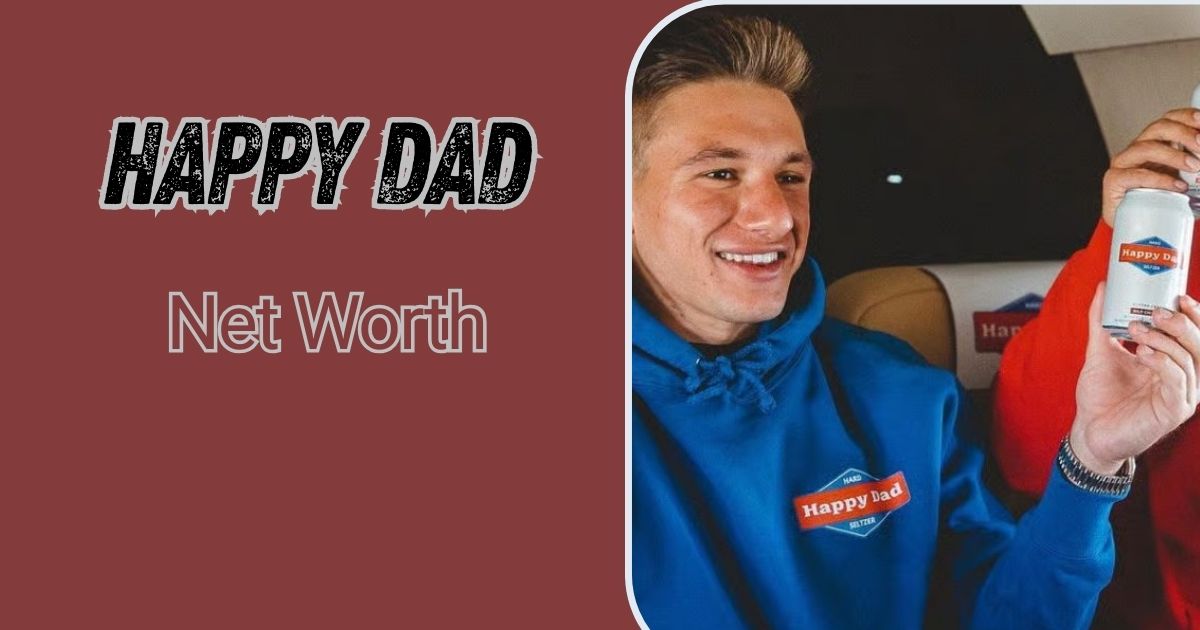
The Happy Dad net worth story reads like a masterclass in modern brand building. Kyle Forgeard, Sam Shahidi, and John Shahidi transformed their NELK Boys following into a beverage juggernaut. What started as an influencer side project became a $250-300 million empire in under five years. That’s faster than most traditional beverage companies achieve in decades.
Happy Dad Hard Seltzer didn’t need Super Bowl ads or celebrity spokespeople. The Full Send brand community did the heavy lifting. Their approach challenged every conventional wisdom about launching alcoholic beverages. The result? A brand that now rivals industry veterans while maintaining authentic street credibility that money can’t buy.
Related Post: Angel Wicky: Complete Biography, Age, Career & Net Worth
Quick Bio
| Attribute | Details |
| Brand Name | Happy Dad Hard Seltzer |
| Founded | June 2021 |
| Founders | Kyle Forgeard, John Shahidi, Sam Shahidi (NELK Boys / Full Send) |
| Industry | Alcoholic Beverages |
| Headquarters | Orange County, California, USA |
| Flagship Product | Hard Seltzer (5% ABV) |
| Estimated Brand Net Worth (2026) | $250–300 million |
| Estimated Annual Revenue | $80–100 million |
| Popular Flavors | Wild Cherry, Lemon Lime, Pineapple, Watermelon |
| Distribution | U.S., Canada, expanding to Europe & Australia |
| Social Media Reach | 20+ million followers across platforms |
The numbers tell only part of the story. Happy Dad brand value reflects something deeper than spreadsheets capture. This beverage company emerged from YouTube influencer culture, not corporate boardrooms. The happy dad owners built trust with their audience over years before launching their first product.
Their timing proved impeccable. The hard seltzer market was exploding, but consumers craved authenticity. Traditional brands felt corporate and sterile. Happy Dad brought personality, humor, and genuine connection to every can. That cultural resonance translates directly into the happy dad valuation investors now chase.
Who Owns Happy Dad?
Kyle Forgeard, Sam Shahidi, and John Shahidi maintain controlling ownership stakes in Happy Dad Hard Seltzer. These three happy dad founders leverage their NELK Boys empire to drive unprecedented growth. Sam Shahidi serves as CEO, bringing business acumen from his Shots Podcast Network success. His strategic vision shaped the company from day one.
John Shahidi handles partnerships and strategic alliances. Kyle Forgeard remains the brand’s public face, connecting with millions of fans daily. SteveWillDoIt joined as a founding partner and co-owner, though specific happy dad ownership percentage details remain private. Investment firms like Anti Fund and Lakeside Capital hold minority stakes, but the founders retain majority control.
The Full Send ecosystem amplifies everything they touch. Merchandise sales, podcast sponsorships, and social media influence create synergies most beverage companies can’t replicate. This integrated approach explains why Kyle Forgeard Happy Dad initiatives succeed where others fail. Their existing infrastructure provided instant distribution channels and brand awareness worth millions in traditional advertising.
How Happy Dad Became So Popular
Authenticity drove happy dad sales growth from day one. The happy dad marketing strategy rejected traditional advertising playbooks entirely. Instead, they activated their 20+ million follower base across platforms. Fans didn’t just buy the product—they became evangelists spreading the gospel of great-tasting hard seltzer.
The hard seltzer industry was crowded with competitors when they launched. White Claw dominated shelves. Truly offered endless flavor varieties. Yet Happy Dad carved out distinctive territory by focusing on lifestyle branding over product features. They sold community membership, not just beverages. Every can represented belonging to something bigger.
Their larger 16 oz cans disrupted standard packaging norms. Competitors stuck with 12 oz formats. This simple differentiation communicated value and boldness simultaneously. The happy dad can size became a conversation starter, reinforcing their challenger brand positioning. Social media buzz transformed into real-world sales faster than anyone anticipated.
Happy Dad’s Rise to Success
Happy Dad achieved national distribution within 12 months of launch. That trajectory defies beverage industry norms where regional rollouts take years. Their retail liquor distribution strategy prioritized convenience store sales over traditional grocery channels initially. This focus on impulse purchases among younger consumers proved brilliant.
Walmart alcohol sales and Target liquor availability partnerships followed quickly. Major retailers recognized the brand’s momentum and demographic appeal. Happy Dad convenience store sales rankings shot to #4 in dollar growth, up $7.5 million year-to-date. That represents a 14% increase in Circana sales data tracking across multi-outlet and convenience channels.
The brand sold 224 million cans in just four years. That volume demonstrates staying power beyond initial hype cycles. Happy dad annual revenue estimates of $80-100 million reflect consistent consumer demand. They avoided the “flash in pan” fate plaguing many influencer-led brands by maintaining product quality and community engagement simultaneously.
Initial Struggles and Successes
Skepticism greeted their launch announcement. Industry veterans questioned whether YouTuber alcohol brands could succeed long-term. Retailers hesitated to allocate shelf space to unproven products. The Nelk Boys Happy Dad connection seemed more liability than asset to traditional distributors concerned about brand longevity.
Production capacity challenges emerged as demand exceeded forecasts. Supply chain management for alcoholic beverage market distribution requires expertise beyond social media skills. The founders learned quickly, partnering with experienced beverage industry professionals. Their willingness to acknowledge gaps and hire experts prevented early disasters.
Early adopter feedback shaped product iterations. The fermented cane sugar alcohol base delivered clean taste profiles consumers loved. Gluten-free hard seltzer formulation expanded their addressable market. These adjustments, informed by direct customer communication, built loyalty that paid dividends as distribution expanded nationwide.
Happy Dad Net Worth (2025)
The happy dad net worth reached an estimated $250-300 million by 2025. This happy dad brand value calculation considers multiple factors beyond simple revenue multiples. Brand equity, social media reach, distribution networks, and growth trajectory all contribute to overall valuation. Private company status limits transparency, but industry comparables provide reasonable benchmarks.
Happy dad revenue of $80-100 million annually supports the valuation range. Beverage companies typically trade at 2.5-4x revenue multiples, depending on growth rates and profitability. Happy Dad’s explosive growth and demonstrated staying power justify premium valuations. Investors recognize the full send brand ecosystem creates defensible competitive advantages worth significant premiums.
The happy dad founders net worth individually remains separate from company valuation. Kyle Forgeard, Sam Shahidi Happy Dad equity stakes, and John Shahidi Happy Dad holdings represent substantial personal wealth. Their majority ownership positions mean the brand’s success directly enriches them. However, specific ownership percentages and personal net worth figures aren’t publicly disclosed.
Inside the Business Model
Happy Dad business model combines multiple revenue streams strategically. Direct-to-consumer alcohol sales through their website capture higher margins than wholesale channels. Drizly alcohol delivery partnerships expand accessibility in states with favorable regulations. This multi-channel approach maximizes reach while maintaining brand control.
Retail liquor distribution through major chains provides volume and visibility. Wholesale margins are thinner, but scale compensates. Full Send merchandise integration creates additional revenue from the same customer base. T-shirts, hats, and accessories carry 60-70% profit margins, subsidizing customer acquisition costs for beverage sales.
The 16 oz can format drives unique economics. Higher price points ($3-4 per can) versus competitors’ 12 oz offerings ($2-3) improve per-unit profitability. Consumers perceive greater value with the larger size. Production costs don’t increase proportionally, creating margin advantages competitors struggle to match without abandoning their existing packaging infrastructure.
Happy Dad’s Marketing and Brand Lifestyle
Happy Dad lifestyle brand positioning transcends beverage categories entirely. They’re not selling fermented cane sugar with fruit flavoring. They’re offering membership in a community that values fun, freedom, and authentic self-expression. The Full Send mantra embodies this philosophy—live boldly, take risks, embrace adventure.
Pop culture alcohol brand integration happens organically through content creation. NELK Boys videos feature Happy Dad naturally, never forced or scripted. Behind-the-scenes brewery tours, flavor development sessions, and distribution adventures entertain while subtly reinforcing brand values. This brand community engagement strategy builds deeper connections than traditional advertising could achieve.
Their “No gimmicks. Just great seltzer.” slogan communicates product confidence simply. While competitors emphasize low calories or exotic flavors, Happy Dad focuses on taste and authenticity. This youth-focused branding resonates because it respects consumers’ intelligence. They’re not tricking anyone—just delivering a great product from people you already trust.
Social Media and Viral Success
Happy Dad social media marketing launched the brand into stratosphere. Twenty million followers across YouTube, Instagram, and TikTok provided instant awareness traditional brands spend decades building. Viral marketing campaigns didn’t require expensive agencies or production budgets. Authentic content from founders performed better than polished advertisements ever could.
Instagram promotions showcased lifestyle integration naturally. Beach parties, backyard barbecues, and road trips featured Happy Dad prominently without feeling like commercials. TikTok alcohol marketing leveraged trending sounds and challenges to reach younger legal-age consumers. This influencer alcohol brands playbook proved far more effective than traditional media placements.
Social Media Strategy
Platform-specific approaches maximized impact across channels. YouTube long-form content provided depth and storytelling opportunities. NELK Boys videos averaging 20-30 minutes allowed immersive brand experiences. Viewers spent meaningful time with products and personalities, building familiarity that drives purchasing decisions.
Instagram and TikTok delivered quick-hit engagement perfect for snackable content. Stories, Reels, and short videos maintained constant presence without overwhelming audiences. User-generated content encouragement turned customers into brand ambassadors. Hashtag campaigns like #FullSend amplified reach exponentially through community participation rather than paid promotion.
Viral Campaigns
Launch campaigns generated millions of organic impressions without media budgets. SteveWillDoIt chugging challenges showcased the product while entertaining audiences. These weren’t scripted advertisements—they were genuine moments fans shared enthusiastically. Celebrity alcohol partnerships with fitness influencer Bradley Martyn expanded reach into adjacent demographics.
Product reveal videos built anticipation for weeks before launch. Teasers, countdowns, and behind-the-scenes glimpses created excitement comparable to major entertainment releases. When Happy Dad finally hit shelves, lines formed at retailers. This viral marketing approach generated buzz worth millions in traditional advertising spend—completely free.
Revenue and Brand Value
Happy dad annual revenue of $80-100 million positions them among top emerging beverage brands. Year-over-year dollar sales growth of 14% outpaces most competitors in the saturated hard seltzer competition landscape. This consistent expansion demonstrates sustainable business fundamentals beyond initial hype cycles.
Brand valuation methodologies for private companies combine revenue multiples with qualitative factors. Social media following, brand recognition, and distribution networks add significant value beyond sales figures. Happy Dad brand equity includes trademark value, celebrity founder associations, and the entire Full Send ecosystem synergies.
Market share growth continues accelerating despite late entry into crowded categories. Their #4 ranking in convenience channel growth proves the model works. As distribution expands internationally, revenue potential multiplies. Happy Dad Canada launch success demonstrated international viability, validating expansion plans for Happy Dad Europe Australia markets.
Comparisons to Competitors
| Feature | Happy Dad | White Claw | Truly | High Noon |
| Founded | 2021 | 2016 | 2016 | 2019 |
| Owner | NELK Boys/Full Send | Mark Anthony Group | Boston Beer Company | E & J Gallo |
| ABV | ~5% | ~5% (8% Surge) | ~5% (8% variants) | ~4.5% |
| Can Size | 16 oz | 12 oz | 12 oz | 12 oz |
| Calories | ~100 | ~100-110 | ~100-120 | Higher (real juice) |
| Positioning | Lifestyle/Influencer | Category Leader | Flavor Variety | Vodka Cocktail |
| Growth Rate | +14% YOY | Mature/Stable | Competitive | Strong Niche |
The happy dad vs White Claw comparison reveals strategic differentiation. White Claw owns mainstream dominance through ubiquitous distribution and brand recognition. Happy Dad competes through community connection and larger format value proposition. Different approaches targeting overlapping but distinct consumer segments.
Happy dad vs Truly shows flavor strategy divergence. Truly offers 30+ flavors appealing to variety seekers. Happy Dad maintains focused core lineup, avoiding SKU proliferation complexity. This simpler approach reduces production costs and retail complexity while maintaining strong consumer appeal through quality over quantity.
Key Insights from the Comparison
Happy Dad disrupts through packaging innovation and brand personality. The 16 oz can format creates immediate visual differentiation on crowded shelves. Higher per-unit price points improve margins while communicating premium positioning. Competitors could theoretically copy the format, but brand authenticity can’t be replicated.
Influencer marketing advantages persist as long as founder involvement continues. Kyle Forgeard, Sam Shahidi, and John Shahidi actively promote products daily through organic content. Traditional brands must pay influencers for endorsements. Happy Dad gets authentic advocacy from ownership itself—an unbeatable competitive advantage.
Where Is Happy Dad Sold?
Happy Dad distribution spans most major U.S. states with ongoing expansion. Walmart alcohol sales sections stock multiple flavors in thousands of locations nationwide. Target liquor availability varies by state regulations but grows consistently. Local liquor stores provide crucial touchpoints for trial and impulse purchases among target demographics.
Drizly alcohol delivery partnerships enable online ordering where legal. State-by-state alcohol regulations complicate e-commerce, but they’re navigating complexities successfully. Direct-to-consumer alcohol sales through their website serve markets where permitted, capturing premium margins while controlling customer experience completely.
Happy Dad Canada launch proved international viability immediately. Canadian consumers embraced the brand enthusiastically, validating expansion potential. Happy Dad international expansion into Europe and Australia markets progresses steadily. These regions offer growth opportunities as U.S. market matures and competition intensifies domestically.
Happy Dad’s Founders and Vision
Sam Shahidi, born August 1, 1983, serves as Happy Dad CEO bringing entrepreneurial experience from Shots Podcast Network. His business acumen balances Kyle Forgeard’s creative vision and public-facing charisma. John Shahidi handles strategic partnerships and operational scaling, ensuring growth doesn’t compromise quality or brand integrity.
Their collective vision extends beyond selling beverages. The Full Send philosophy encompasses merchandise, media content, and community building. Happy Dad represents one expression of broader lifestyle branding strategy. This integrated approach creates multiple revenue streams and customer touchpoints impossible for single-product beverage companies to replicate.
SteveWillDoIt Happy Dad involvement amplifies reach into fitness and challenge-focused audiences. His massive following and authentic product enthusiasm drive significant sales. Celebrity endorsements from him feel genuine because he’s an owner, not a paid spokesperson. This authenticity resonates powerfully with skeptical younger consumers.
Happy dad net worth 2026
Current happy dad net worth estimates reach $250-300 million for 2026. The private beverage company structure limits financial transparency, making precise valuation challenging. Revenue approaching hundreds of millions supports substantial company worth. However, individual founders net worth separate from company valuation complicates public understanding.
Sam Shahidi and Kyle Forgeard personal wealth grows as brand value appreciates. Their majority ownership stakes mean company success directly enriches them personally. Exact percentages remain undisclosed, but founders typically retain 60-80% equity in similar venture-backed consumer brands after initial funding rounds.
Conclusion
The happy dad net worth story demonstrates modern brand-building power. NELK Boys transformed YouTube fame into beverage empire in under five years. Their $250-300 million valuation validates influencer-led brands as legitimate business models, not fleeting trends. Strategic execution, authentic community engagement, and quality products create sustainable competitive advantages.
Happy Dad’s future looks exceptionally bright. International expansion, new flavor innovation, and continued social media marketing dominance position them for ongoing growth. The alcoholic beverage market offers massive opportunities for brands resonating authentically with younger consumers. Few companies match Happy Dad’s cultural credibility and operational execution simultaneously.
Whether you’re an entrepreneur, investor, or simply hard seltzer enthusiast, Happy Dad provides valuable lessons. Authenticity trumps advertising budgets. Community beats corporate polish. Execution matters more than perfection. The Full Send crew proved that building a real business around genuine relationships creates more value than any marketing campaign ever could.

David Ford is a content strategist and lead author at CaptionTap, where he leverages his writing expertise to craft engaging captions, social media bios, and inspirational text that helps users express personality and connect with their audience. With deep experience in digital content trends and audience engagement, David writes with clarity, creativity, and practical insight to make every caption meaningful, memorable, and share‑ready.